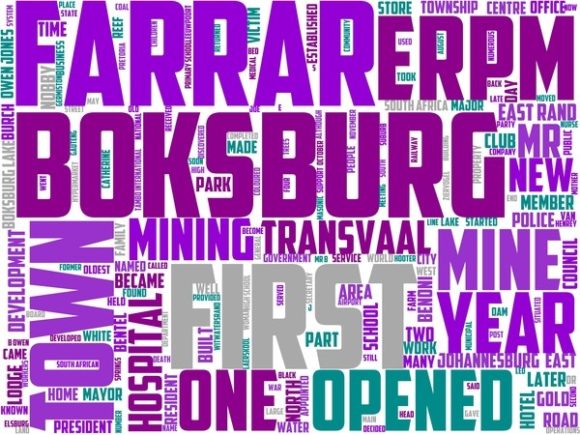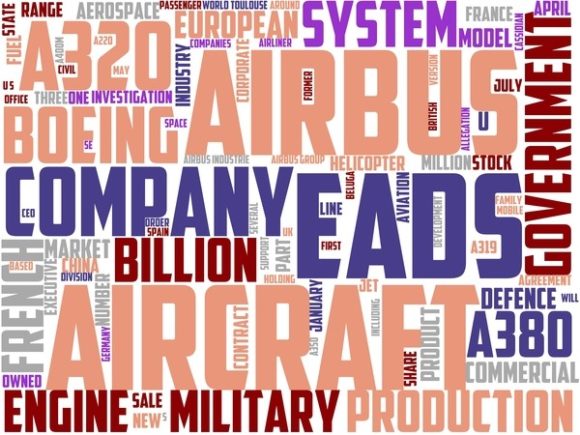
Airbrushing Wordart Wallpaper
Airbrushing Wordart Wallpaper isn’t just a decorative asset—it’s a versatile, process-integrated design element that bridges visual communication with functional creativity. At its core, it’s a hand-drawn, colorful wordcloud rendered with soft airbrush textures and intentional spacing, optimized for scalability and adaptability across physical and digital outputs. Unlike static clipart or generic typography, this wallpaper carries expressive weight: each word is legible, balanced, and arranged to evoke inspiration without visual clutter. It fits naturally into workflows where meaning, mood, and message must coexist—whether you’re developing a brand identity, designing classroom materials, prototyping textile patterns, or preparing a client pitch deck.
How It Fits Into Real Creative Workflows
Designers and makers rarely start from blank canvas—they build on assets, constraints, and intentions. Airbrushing Wordart Wallpaper functions as both a foundational layer and a finishing accent. Before a project begins, it serves as a visual prompt during brainstorming or mood board assembly. Its organic layout helps surface thematic connections between keywords—“resilience,” “clarity,” “growth”—and encourages non-linear thinking. During execution, it acts as a ready-to-use compositional anchor: overlay it on a poster background at 15% opacity to guide hierarchy, or isolate individual words to label sections in a workshop handout. After finalization, it adds tactile warmth to printed deliverables—think letterpress business cards where the subtle texture of the airbrushed words contrasts cleanly with crisp serif type.
For educators building lesson plans, the wallpaper works early in the planning phase—not as decoration, but as a content scaffolding tool. Print it at low resolution on large-format paper, then annotate directly over the words with learning objectives, discussion questions, or student-facing prompts. Marketers use it mid-campaign: drop the file into Canva or Adobe Express, adjust saturation to match brand colors, and generate social banners in under five minutes. Small business owners integrate it into product mockups before ordering inventory—applying it to pillow templates or tote bag previews ensures visual cohesion across touchpoints before production begins.
Compatibility and Cross-Platform Use
Airbrushing Wordart Wallpaper is delivered in high-resolution PNG (with transparent background) and vector-based SVG formats—ensuring fidelity whether scaling to a 48” trade show banner or shrinking to a 1.5” sticker. That dual-format approach eliminates guesswork when moving between tools. In Illustrator, the SVG retains editable layers; in Procreate, the PNG imports cleanly with alpha channel support for masking. For print-on-demand platforms like Printful or Gelato, the 300 DPI PNG meets technical specs without resampling artifacts. Even in constrained environments—like Canva’s free tier—the file maintains readability when used as a background layer beneath bold, contrasting text.
It integrates seamlessly with common color systems. The base palette uses muted pastels layered with vibrant accents (e.g., dusty rose, sage, cobalt), making it easy to harmonize with Pantone libraries or HEX-defined brand guidelines. No recoloring is required unless deliberate contrast is needed—for example, flipping to monochrome for a minimalist journal cover or boosting saturation for festival merchandise. Because the airbrush effect is baked into the artwork—not applied as a filter—it remains consistent across devices and software, avoiding the unpredictable rendering that plagues gradient overlays or live effects.
Practical Implementation Tips
- Preparation matters: Before importing, define your output context. Need fabric print? Confirm bleed and repeat dimensions first—then scale the wallpaper to tile seamlessly. Designing for web? Export a WebP version with lossless compression to retain soft edges without bloating load time.
- Layer intentionally: Avoid stacking multiple decorative elements. Let Airbrushing Wordart Wallpaper occupy one visual tier—either as background texture or foreground focal point—and pair it with clean, functional typography (e.g., Inter or Lora) for body copy. This preserves legibility and prevents cognitive overload.
- Repurpose thoughtfully: Isolate single words using selection tools—not just for quotes, but for consistent UI labeling. Use “focus” on a planner page header, “explore” on a workshop agenda slide, “create” on a notebook spine. Repetition builds recognition without redundancy.
- Test for accessibility: Run contrast checks when placing text over the wallpaper. Light-colored words over pale backgrounds may fail WCAG AA standards. A quick fix: add a subtle 2px semi-transparent stroke around overlay text, or reduce wallpaper opacity to 30–40% in design software.
Long-Term Usability and Quality Control
This isn’t disposable design. Because the wordcloud is hand-drawn—not algorithmically generated—it avoids the homogeneity of AI-generated alternatives. Each curve, overlap, and fade was calibrated by eye, giving it longevity in portfolios, client presentations, and personal projects. Users report reusing the same file across multiple years for seasonal campaigns, simply adjusting color balance or cropping to emphasize different terms. That durability stems from intentionality in construction: no words are truncated, kerning is visually balanced (not mathematically uniform), and negative space is preserved to prevent crowding at any scale.
For teams or educators managing shared assets, consistency improves when Airbrushing Wordart Wallpaper becomes a defined element in style guides. Include usage notes—e.g., “Use only at 20–60% opacity for backgrounds,” “Do not rotate or distort,” “Pair exclusively with sans-serif headings”—so collaborators maintain visual integrity without constant oversight. Version control is simplified: since the file doesn’t rely on fonts or plugins, there’s no risk of missing assets when sharing across platforms or handing off to contractors.
Where It Adds Value Beyond Aesthetics
For freelancers pitching services, embedding Airbrushing Wordart Wallpaper into proposal decks signals attention to tone and audience alignment—especially when words like “collaborate,” “refine,” and “deliver” appear organically within visuals. Bloggers use it to break up long-form posts: a centered 800px-wide section with the wallpaper behind a pull quote reinforces key takeaways without interrupting flow. Publishers apply it to ebook chapter dividers, creating rhythm between sections while reinforcing thematic continuity across titles in a series.
In home décor and textile applications, the airbrush texture mimics hand-painted finishes—making it ideal for products where authenticity matters. When printed on organic cotton tea towels or linen pillowcases, the soft edges translate physically as gentle tonal shifts, not harsh lines. Jewelry designers laser-etch simplified versions onto pendant blanks, leveraging the wordcloud’s inherent asymmetry to avoid rigid symmetry that feels mass-produced.
Ultimately, Airbrushing Wordart Wallpaper earns its place in daily practice not because it’s trendy, but because it reduces friction. It shortens the gap between idea and execution—no need to source, license, or manipulate multiple elements. It supports clarity without sacrificing warmth. And it adapts, quietly and reliably, whether you’re sketching a concept on paper or automating a hundred custom greeting cards through a print API. That kind of quiet utility—consistent, scalable, human-centered—is what makes it endure across projects, roles, and years.