Trade Union Official Typography Background: A Distinctive Design Resource for Purpose-Driven Creatives
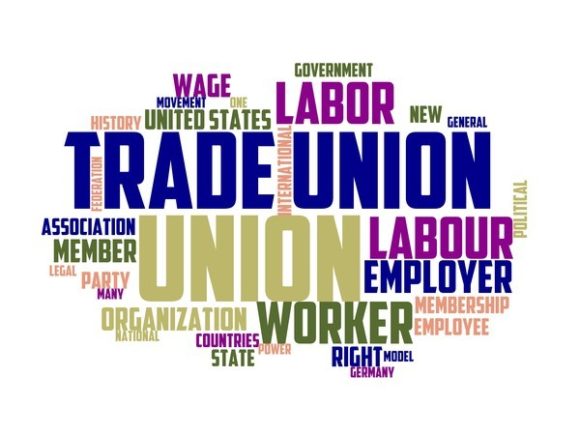
Trade Union Official Typography Background refers to a curated, hand-drawn typographic wordcloud—designed with intention, not just aesthetics. It’s not a font family, nor a digital typeface generator. Instead, it’s a ready-to-use visual asset: a dense, colorful, organically arranged composition of words like “solidarity,” “justice,” “voice,” “equity,” “dignity,” and “collective”—rendered in expressive, human-scaled lettering. Its distinction lies in how it merges historical resonance with contemporary craft sensibility: the typography evokes the tactile authenticity of union banners, protest posters, and grassroots print culture, while its vibrant, hand-drawn execution makes it adaptable across modern design contexts.
What Sets This Wordcloud Apart from Generic Typography Assets
Unlike algorithmically generated word clouds or commercially licensed display fonts, Trade Union Official Typography Background is rooted in deliberate compositional logic. Each word is hand-placed—not scaled by frequency alone—but balanced for visual rhythm, legibility at multiple sizes, and emotional weight. The color palette avoids flat digital saturation; instead, it uses layered, slightly textured hues that translate well to screen and print alike—important when applying the design to fabric, ceramic, or paper stock. Crucially, it’s delivered as a high-resolution vector or layered PNG, preserving crispness whether scaled for a business card or a 48-inch poster.
This contrasts with standard typographic tools (like Adobe Fonts or Google Fonts) that offer individual letters but require manual layout and conceptual framing. It also differs from clipart-style word clouds, which often prioritize density over coherence and lack thematic consistency. Here, every word supports a unified narrative—centered on labor rights, community action, and shared values—making it functionally meaningful, not merely decorative.
Where It Fits—and Where It Doesn’t—in Real-World Creative Workflows
Trade Union Official Typography Background excels in projects where message and medium reinforce one another. For example, a local union chapter designing a rally banner benefits from its immediate visual legibility and ideological clarity—no need to source, license, or typeset individual words. Similarly, an independent textile designer printing on tote bags or scarves gains cohesion: the hand-drawn quality aligns naturally with artisanal production values, avoiding the disconnect of pairing machine-perfect sans-serifs with hand-stitched seams.
It’s equally effective for educators developing classroom materials about labor history, or nonprofit organizers creating invitation suites for worker-led workshops. In those cases, the background doesn’t just fill space—it signals alignment before a single sentence is read. That contextual resonance is difficult to replicate with generic design assets.
However, flexibility comes with boundaries. Because the composition is fixed—not modular—the wordcloud isn’t suited for dynamic content needs. You can’t easily swap “bargaining” for “organizing” without redesign work. Nor does it function as a UI element: it lacks the scalability and contrast ratios required for accessible web interfaces or mobile app buttons. If your goal is to build a responsive website navigation bar or generate personalized certificates with variable names, this background serves better as a hero-section accent than a structural component.
Comparing Practical Applications Across Mediums
When evaluating suitability, consider how the background behaves across output formats:
- Clothing & Textiles: Works exceptionally well on cotton tees, denim jackets, or woven labels—especially when printed via screen or direct-to-garment methods that preserve line integrity and subtle color layering.
- Stationery & Paper Goods: Performs reliably on uncoated stocks used for postcards, notebooks, and letterpress-printed invitations. Avoid ultra-thin papers where reverse-side show-through may blur fine strokes.
- Home Décor & Accessories: Scales cleanly for pillow covers, ceramic mugs, and enamel pins—provided the vendor supports vector-based artwork and understands color separation limits for multi-tone printing.
- Digital Use: Effective in social media banners, ebook chapter headers, or presentation slides—but avoid embedding it as body text or small interface elements where readability suffers.
Compare this to a scalable SVG icon set or a parametric font: those offer infinite recombination but demand more design labor to achieve thematic unity. Trade Union Official Typography Background trades that flexibility for immediacy and tonal precision.
Strengths, Limitations, and Decision Factors
Its primary strength is semantic efficiency: it communicates ethos and subject matter in one glance. That saves time during concept development and strengthens audience recognition—particularly among viewers already attuned to labor movement visual language. It also reduces licensing complexity; unlike stock imagery or proprietary fonts, it typically comes with broad commercial-use rights, including merchandising and resale—critical for makers selling union-themed goods.
Limitations are practical, not aesthetic. Because it’s hand-crafted, minor revisions—such as adjusting spacing between two adjacent words or changing a single hue—require either vector-editing proficiency or collaboration with the original designer. It also assumes a baseline familiarity with the underlying values; for audiences unfamiliar with labor terminology, some words may read as abstract rather than resonant. Contextual support—like accompanying copy or imagery—helps bridge that gap.
Key decision factors include:
- Project scope: Is this a one-off poster or part of a long-term brand system? For sustained use, assess whether the wordcloud’s tone remains appropriate across varied applications.
- Production constraints: Does your printer support layered transparency or spot-color builds? Some budget print services flatten layers, muting intended texture.
- Audience alignment: Will viewers recognize and connect with the vocabulary—or will it feel stylistically evocative but semantically distant?
- Customization needs: If you require frequent word swaps or multilingual versions, a custom-typed solution may prove more sustainable long term.
When to Choose—And When to Look Elsewhere
Choose Trade Union Official Typography Background if your priority is authentic, values-aligned visual shorthand that works across physical and digital touchpoints without extensive adaptation. It’s especially valuable when time, consistency, or thematic clarity outweighs the need for granular control over individual elements.
Consider alternatives if your project demands strict accessibility compliance (e.g., WCAG AA contrast for body text), requires real-time content updates, or targets audiences outside labor-adjacent spaces—where more neutral or broadly inclusive typographic approaches may land with greater universality. In those cases, a carefully selected serif or humanist sans-serif—paired with intentional hierarchy and spacing—may serve more flexibly.
Ultimately, Trade Union Official Typography Background is a tool shaped by context as much as craft. It reflects a specific cultural lineage and serves best when that lineage is part of the story you’re telling—not just the surface you’re decorating. Used thoughtfully, it adds depth, dignity, and continuity to creative work grounded in collective action. Used without attention to fit, it risks becoming ornamental rather than operative. Like any meaningful design resource, its value emerges not from what it is in isolation, but from how deliberately it’s placed within a larger purpose.