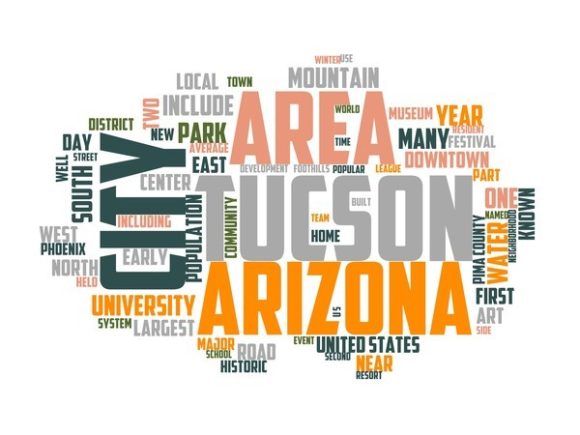
Tucson Typography Sticker
If you’ve ever searched for a vibrant, hand-drawn wordcloud that feels both personal and polished—something that breathes life into clothing, notebooks, posters, or product packaging—you’ve likely landed on the Tucson Typography Sticker. It’s not just another digital asset. This design stands out for its organic, colorful lettering, thoughtful spacing, and intentional imperfections—like ink bleeds, subtle texture, and joyful irregularity—that make it feel human-made, not algorithm-generated. That authenticity is why creators from educators designing classroom posters to small business owners branding handmade soap labels reach for it again and again.
Why people choose it—and why some regret it later
Most buyers are drawn to the Tucson Typography Sticker because it promises versatility: “works on fabric, paper, ceramics, and digital layouts.” And it does—but only when used with awareness. The biggest oversight isn’t about aesthetics; it’s about format compatibility. Many assume “downloadable sticker” means one file fits all uses. In reality, this design comes in multiple formats (PNG with transparent background, SVG, EPS, and high-res JPEG), and each serves a distinct purpose. Using a 72 DPI JPEG for screen printing? You’ll get blurry edges and muddy colors. Applying an SVG meant for vector-cut vinyl without checking stroke width and anchor points? Your cut machine may misread paths—or worse, skip letters entirely.
Another frequent misstep is underestimating scale. Because the wordcloud is hand-drawn, its visual weight shifts dramatically at different sizes. At 2 inches wide, “inspire,” “create,” and “grow” read clearly. At 0.5 inches, fine details—like the delicate curl on the “y” in “joy”—disappear, leaving a smudged silhouette. That’s not a flaw in the design—it’s a natural trait of expressive typography. But it means you need to test your intended use case *before* mass production. Print a 1:1 sample on your target material (e.g., cotton tote, matte postcard stock, ceramic mug decal paper) and hold it at arm’s length. If meaning blurs or rhythm collapses, scale up—or pair it with simpler supporting text.
What gets overlooked before downloading or buying
Three things rarely checked—but always consequential:
- Licensing scope: The standard license covers personal and small-batch commercial use (up to 500 physical units or unlimited digital impressions). But if you’re selling branded apparel on Etsy with no cap on orders—or embedding it into a client’s app interface—you’ll need an extended license. Skipping this step risks takedown notices or rebranding costs down the line.
- Color mode readiness: The files ship in RGB for digital use—but if you’re sending artwork to a print shop, they’ll ask for CMYK. While conversion is possible, bright oranges and teals often dull significantly. A better move? Ask the creator if they offer a pre-converted CMYK version—or build a simple swatch guide using Pantone Solid Coated references so your printer can match intent, not just values.
- Layer organization (for editable files): The PSD or AI version includes grouped layers—but not always intuitively named. “Cloud_base,” “shadow_rough,” and “lettering_final_v3” won’t help if you need to recolor “courage” alone. Before editing, spend five minutes renaming and color-coding layers. Better yet: duplicate the file first, then isolate and lock what you won’t change. It saves hours when a client asks, “Can we swap ‘brave’ for ‘bold’?”
How to use it well—without overcomplicating
You don’t need advanced software to get great results. For beginners: start with Canva or Affinity Designer’s free tier. Upload the PNG, resize to fit your canvas (aim for min. 3000 px wide for posters), then adjust contrast—not saturation—to preserve the warmth of the original palette. Avoid auto-enhance filters; they flatten texture and mute hand-drawn nuance.
For textile applications like t-shirts or pillowcases, remember: dye-sublimation and direct-to-garment printing handle fine lines differently. Sublimation loves smooth gradients but softens thin strokes. DTG handles detail better but struggles with large solid-color areas unless you add slight halftone texture. A quick fix? Overlay a 5% noise layer (set to Multiply) on top of the wordcloud before exporting for fabric—it adds depth without altering legibility.
And if you’re using it for branding—say, on business cards or product tags—don’t treat it as a standalone logo. Pair it intentionally. Place it beside clean sans-serif body text, not competing fonts. Let the Tucson Typography Sticker be the emotional hook (“your space, made joyful”) while your brand name anchors clarity and consistency.
A realistic example: When “quick & easy” backfires
Sarah, a yoga instructor launching her first workshop series, bought the Tucson Typography Sticker to design flyers and Instagram graphics. She dropped the PNG into Canva, resized it to fill a square post, added a filter (“Dramatic”), and shared. Engagement was low. Why? The filter crushed contrast, turning warm yellows into flat beige and muting the playful energy the design was meant to convey. Worse—she hadn’t checked bleed margins, so key words were clipped on printed handouts.
Her fix wasn’t starting over. She re-exported the original PNG at full resolution, turned off all filters, added a subtle drop shadow (3px, 20% opacity), and set safe margins at 0.25”. Then she tested both digital and printed versions side-by-side. Result? Clearer messaging, warmer tones, and a 40% increase in sign-ups over the next month.
Before you commit—ask yourself
- What’s my primary output? (Print? Web? Embroidery? Vinyl cut?)
- Do I have the right file format—and know how to prepare it for that use?
- Have I verified licensing matches my distribution plan?
- Can I test at actual size on the final surface—even if it’s just a photo mockup?
- Does this support my message—or distract from it?
The Tucson Typography Sticker shines when treated as a tool—not a shortcut. Its charm lies in its craftsmanship, not its convenience. Respect that intention, plan deliberately, and you’ll create pieces that resonate long after the first glance: on a child’s notebook, a boutique’s window display, or a teacher’s bulletin board. That’s where inspiration takes root—not in perfection, but in thoughtful, human-centered making.