Vilnius Typography Book Cover: A Hand-Drawn Word Cloud for Meaningful Design
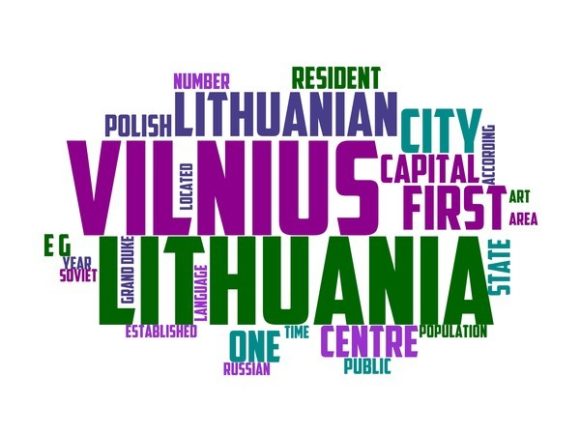
The Vilnius Typography Book Cover is not a conventional book cover in the traditional sense—it’s a standalone typographic artwork rooted in hand-drawn craftsmanship and intentional visual storytelling. At its core, it’s a vibrant, colorful word cloud, carefully composed with organic linework, varied weights, and harmonious color palettes inspired by Lithuanian design sensibilities and mid-century illustration traditions. Unlike algorithmically generated word clouds or vector-heavy digital assets, this piece emphasizes human touch: each letter is drawn—not typed—and each word is thoughtfully placed to balance rhythm, contrast, and readability.
What Sets the Vilnius Typography Book Cover Apart
Its distinction lies in intentionality and adaptability. While many decorative word clouds prioritize density or keyword frequency, the Vilnius Typography Book Cover prioritizes legibility, aesthetic cohesion, and emotional resonance. Words like “inspire,” “create,” “wander,” “pause,” “craft,” and “belong” appear not because they’re trending, but because they form a quiet, inclusive narrative—one that supports reflection rather than overwhelming the viewer.
This isn’t clipart. It’s a design artifact built for reuse across physical and digital contexts without losing warmth or character. The hand-drawn quality ensures it avoids the sterility sometimes associated with AI-generated or template-based typography. And because it’s delivered as high-resolution, layered source files (typically in PNG, SVG, and EPS formats), users retain flexibility in scaling, recoloring, and selective editing—critical for crafters and small-business designers who need precision without licensing friction.
Fitting Into Real-World Creative Workflows
Designers, educators, makers, and small studios use the Vilnius Typography Book Cover where authenticity matters more than speed. For example:
- A textile artist printing on organic cotton tote bags chooses it over stock vectors because its irregular baseline and subtle ink-like texture translate beautifully to screen-printed fabric.
- A boutique stationery brand uses select words from the cloud to build custom wedding invitation suites—repositioning “together,” “joy,” and “begin” into minimalist monochrome layouts without sacrificing personality.
- An independent publisher incorporates the full composition as a wraparound cover for a journal on mindful creativity—leveraging its soft saturation and balanced negative space to signal calm before the first page.
It also performs well in mixed-media applications: layered under watercolor washes, embossed onto kraft paper, or stitched as an outline in embroidery patterns. Its versatility stems less from technical specs and more from how its visual language invites interpretation—not instruction.
How It Compares With Other Typographic Resources
When evaluating options for typographic decoration, three broad categories emerge: algorithmic word clouds, curated font-based compositions, and hand-crafted illustrations like the Vilnius Typography Book Cover.
Algorithmic tools generate clouds based on text input and frequency weighting. They’re fast and free—but often produce cramped, low-contrast arrangements where smaller words vanish at scale, and stylistic control is limited. They rarely support nuanced color transitions or deliberate spacing between conceptually related terms.
Font-based compositions rely on pairing expressive typefaces with layout software. This approach offers maximum customization but demands typographic skill, time, and consistent aesthetic judgment. A designer must curate fonts, adjust kerning, manage hierarchy, and test legibility across sizes—a steep lift for non-professionals or time-constrained teams.
The Vilnius Typography Book Cover sits between these two poles. It provides the human-crafted nuance of a custom commission without requiring design expertise to deploy. It’s pre-balanced for visual weight and proportion, yet retains enough openness—through transparent backgrounds, separated word layers, and editable color swatches—to allow meaningful adaptation.
Tradeoffs to Consider
No resource fits every need. The Vilnius Typography Book Cover excels in expressive, tactile, and emotionally grounded contexts—but has natural boundaries.
It’s not ideal for data-driven visualization. If your goal is to represent survey results or comparative metrics, its emphasis on harmony over hierarchy means it won’t highlight outliers or percentages effectively. Similarly, it’s not built for multilingual expansion: while individual words can be edited, the overall composition assumes Latin-script aesthetics and left-to-right reading flow. Adding Cyrillic or Arabic script would require significant reworking—not just translation.
Also, because it’s hand-drawn, extreme enlargement (e.g., for 10-foot banners) may reveal subtle texture variations that some prefer smoothed out. That said, most users find those variations add charm—not flaw—especially in print-on-demand or craft-scale applications.
Best-Fit Scenarios: When This Resource Earns Its Place
The Vilnius Typography Book Cover is especially well-suited when:
- You’re designing for slow consumption—journals, keepsakes, classroom posters, or wellness-related products where tone and atmosphere carry as much weight as information.
- Your audience values craft, sustainability, or local design heritage—and responds to cues like visible pencil lines, ink bleed suggestions, or muted earth-tone palettes.
- You need a unifying visual motif across multiple product types (e.g., matching mugs, notebooks, and tote bags) without repeating identical layouts—its modular word structure allows selective use and recombination.
- You lack in-house design capacity but want to avoid generic-looking assets—this bridges the gap between DIY simplicity and professional polish.
It also integrates cleanly with common creative tools: Illustrator users extract individual words for logo refinement; Canva creators drop it into templates with minimal resizing; Procreate artists use it as an underlay for hand-lettering practice or digital collage.
When You Might Look Elsewhere
If your project requires strict brand consistency across dozens of SKUs—with tightly controlled font families, exact color codes, and scalable vector paths down to 4pt size—the Vilnius Typography Book Cover may need supplementation. In those cases, pairing it with a complementary custom typeface or developing a simplified derivative version could be a practical next step.
Similarly, if you’re building interactive web experiences—like hover-revealed definitions or animated word sequencing—the static nature of the file means additional development work. It serves best as a foundational visual layer, not a functional component.
And while its color palette is thoughtfully assembled, it’s not inherently accessible by default. Users adding it to public-facing materials should verify contrast ratios for text elements against background colors—especially when repurposing for signage or educational handouts.
Making an Informed Choice
Choosing a typographic resource isn’t about finding the “best” option—it’s about matching method to meaning. The Vilnius Typography Book Cover reflects a particular philosophy: that words gain power not just from what they say, but from how they’re held in space, how they relate to one another, and how they feel to the eye and hand.
Compare it not only to alternatives, but to your own workflow constraints, audience expectations, and long-term usage goals. Does your timeline allow for iterative refinement—or do you need plug-and-play reliability? Is your medium forgiving of texture and variation, or does it demand pixel-perfect uniformity? Are you amplifying a message—or inviting someone to sit with it?
Those questions matter more than any single feature list. The Vilnius Typography Book Cover answers them by offering craft without compromise, clarity without coldness, and flexibility without fragmentation. It doesn’t replace thoughtful design—it supports it, quietly and consistently, across the wide terrain of things people make and share.