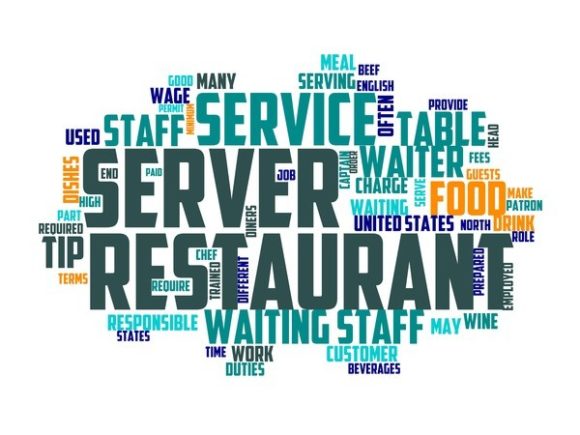
Waitress Typography Banner
If you’ve ever scrolled through a design marketplace and paused at a font that feels like sunshine in type form—warm, approachable, and quietly confident—you’ve probably seen Waitress Typography Banner. It’s not just another display font. It’s a hand-drawn, colorful wordcloud built from expressive, slightly uneven letterforms that breathe personality into every word. Think chalkboard menus at your favorite neighborhood café, but refined: soft curves, subtle texture, vibrant yet balanced color palettes, and intentional irregularity that avoids looking “too perfect” or sterile.
A Font That Speaks Before You Read It
What makes Waitress Typography Banner work so well across contexts isn’t just its visual charm—it’s how it communicates *tone* instantly. The letters aren’t rigidly aligned; they tilt, overlap gently, and vary in weight and hue like real hand-lettering. That gives it an organic, human rhythm. It reads as friendly but not childish, playful but not unserious—ideal for brands and creators who want warmth without sacrificing polish.
This isn’t a body text font. It’s a display font, designed to capture attention in headlines, banners, and focal points. Its strength lies in short bursts: shop names on tote bags, quote art on pillows, event titles on invitations, or taglines on social media graphics. Because each letter is drawn—not algorithmically generated—it carries subtle nuance: a slight lift at the end of a stroke, a gentle taper on a serif, a warm peach tone next to a muted sage. Those details build recognition and emotional resonance over time.
Where It Fits—and Where It Doesn’t
Waitress Typography Banner shines brightest where authenticity and craft matter: textile design for apparel and home décor, packaging for small-batch food or wellness products, editorial spreads in indie magazines, and promotional printables for makers’ markets or Etsy shops. Its hand-drawn nature supports storytelling—whether you’re launching a new line of ceramic mugs or designing a workshop flyer for local creatives.
It also performs well digitally—but with caveats. On websites or apps, use it sparingly: hero section headlines, button labels (with sufficient contrast), or animated social posts where motion enhances its liveliness. Avoid long paragraphs, dense captions, or tiny mobile UI elements. Its decorative nature trades some readability for character, and that trade-off only works when applied intentionally.
You’ll see it less often—and wisely so—in formal legal documents, corporate annual reports, or technical documentation. Its voice doesn’t align with those contexts. That’s not a limitation—it’s clarity. A strong typeface knows its lane, and Waitress Typography Banner owns its space with confidence.
Pairing It Thoughtfully
Because it’s bold and expressive, Waitress Typography Banner pairs best with neutral, grounded companions. Try it with a clean sans serif like Inter or Poppins for body copy on posters or business cards—let the banner carry energy while the supporting font delivers clarity. For print projects like notebooks or greeting cards, a light-weight serif (think Lora or Playfair Display Light) can add quiet elegance without competing.
Avoid pairing it with other highly textured, script-heavy, or similarly colorful fonts. Two “loud” typefaces cancel each other out. Instead, think contrast in function: one for voice, one for voiceover. Test pairings at actual size and in context—on fabric mockups, printed swatches, or live web previews—not just in your font menu.
Licensing, Legibility, and Real-World Use
This is a commercial font, meaning it’s built for professional use—including resale items like T-shirts, stickers, and digital printables. Always verify the license covers your intended use: some versions allow unlimited physical products but restrict SaaS platforms or app embedding. If you're a blogger selling Canva templates or a publisher releasing an e-book with embedded banners, double-check permissions before finalizing.
Legibility depends heavily on scale and background. At 24pt+ on light backgrounds, it’s highly readable. Below 16pt—or over busy patterns or low-contrast photos—it starts to soften. When using it on tags, cups, or fabric, test print or stitch samples first. Colors may shift subtly between screen and physical output, especially with water-based inks or natural fibers.
Also note: this isn’t a full-featured font family with dozens of weights and widths. It’s a focused creative font—optimized for impact, not versatility. That’s intentional. It gives you fewer decisions and more confidence in execution.
More Than Decoration—A Design Decision
Using Waitress Typography Banner isn’t about slapping color onto a layout. It’s a deliberate choice to signal care, craft, and connection. When someone sees it on a handmade candle label or a community event poster, they subconsciously register effort—the kind that says, “This was made for people, not algorithms.” That perception builds trust faster than any tagline.
For marketers, it helps differentiate in crowded feeds. For publishers, it adds tactile warmth to digital-first releases. For crafters, it turns simple embroidery or vinyl-cut projects into signature pieces. Even in logo design, it works beautifully as a secondary mark—paired with a simpler primary logo—to add seasonal flair or campaign-specific personality.
One practical tip: keep a version library. Save layered PSDs or SVGs with editable color groups, so you can quickly adapt the wordcloud for different seasons (e.g., muted terracotta for fall, seafoam and lemon for spring) without redrawing. That flexibility multiplies its value across product lines and campaigns.
Final Thoughts—Use It Like a Tool, Not a Trend
Great typography doesn’t shout. It settles in, supports the message, and leaves room for the viewer to feel something. Waitress Typography Banner does that by honoring the hand behind the design—imperfections included. It’s not for every project. But when it fits? It elevates. It invites. It stays memorable.
If you're evaluating whether it belongs in your next project, ask yourself: Does this need warmth? Does it benefit from visible craft? Will the audience connect with something human-scaled rather than machine-perfect? If yes—then you already know where to start.